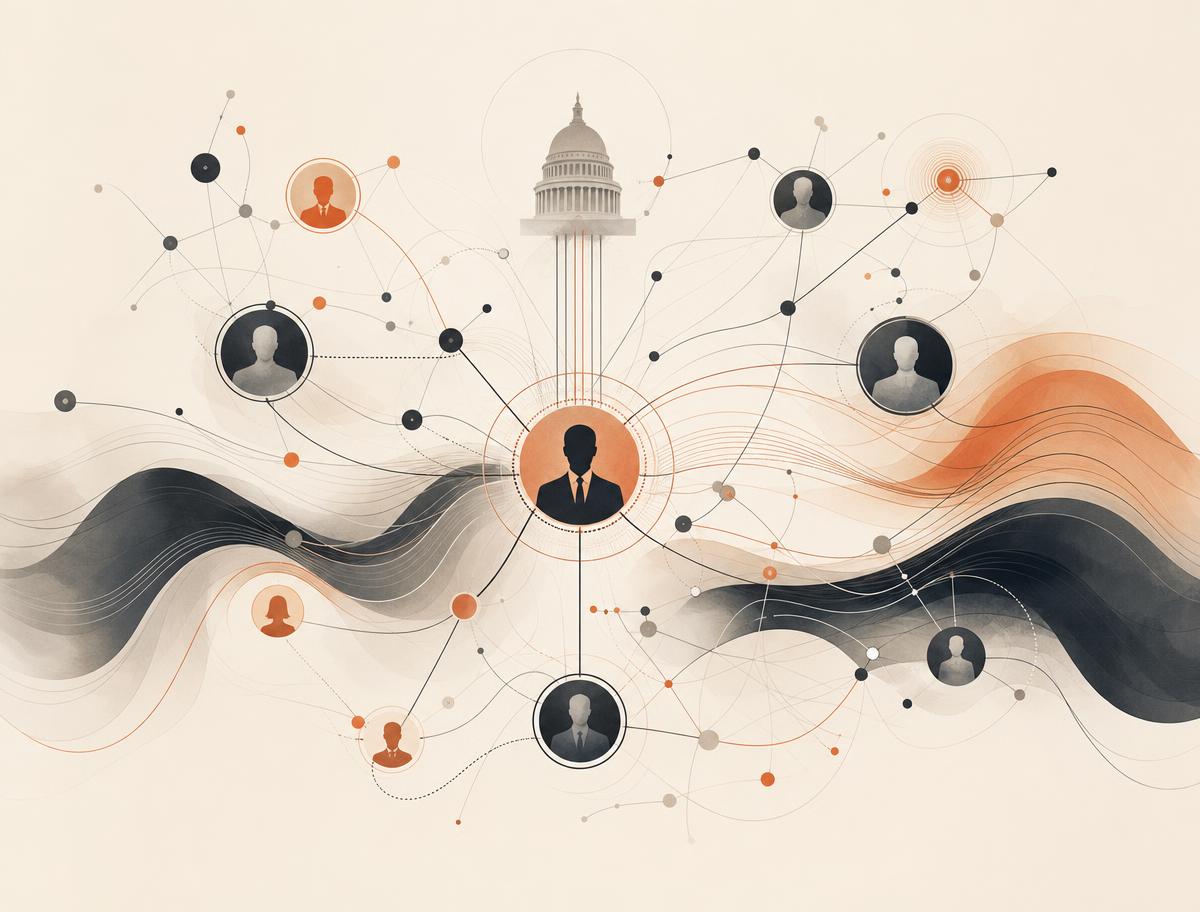
Political intelligence for understanding public debate

Understand what’s shaping the political conversation.

Campaign Read analyzes online political discussion to uncover the concerns, arguments and connections shaping issues and races, alongside and between polls.

Network visualization of public claims, messengers, audience communities, and argument movement
Arguments, context and connections within public discussion

The opportunity

Add the conversation people start themselves.

Survey research remains essential. Campaign Read adds a different source of intelligence: the arguments, concerns and explanations people express without waiting for a questionnaire.

How the signals work together
Illustrative weekly cadence

An illustrative four-week cadence on one shared time scale: polling happens at the first and fourth weeks, public discussion continues throughout, and Campaign Read analysis is shown weekly across all four weeks.

Polls answer questions you ask. They provide defined, comparable measures at specific moments.

Public discussion reveals concerns people raise themselves. Campaign Read analyzes what is available across an observation period.

Beyond topic and sentiment

See what an issue contains.

Campaign Read structures discussion at the level where teams can act: arguments, differences and context—not only mentions or positive and negative labels.

Broad issue

What is being discussed?

01

Distinct concerns

Separate the questions and priorities hidden inside a broad issue.

02

Competing explanations

Understand the claims, objections and reasoning that create disagreement.

03

Connections and context

See how arguments relate across sources, participants and comparable periods.

A broad issue opens into distinct concerns, competing explanations, and connections and context.

From the research

Arguments worth a closer read.

16 races · 13 states

Race analyses

Office

16 analyses

Browse the analysis library

Who it’s for

Political intelligence for the questions your team faces.

Campaign teams

Understand the concerns and competing arguments surrounding your race, then sharpen the questions your research should explore.

Polling firms & research partners

Extend client delivery alongside and between polls by investigating the arguments around findings and surfacing questions for the next wave.

Public-affairs teams

See where disagreement lies, how an issue is being explained and which concerns deserve closer investigation.

Newsrooms

Find substantive lines of inquiry, differences across races and developments worth reporting.

From public discussion to political intelligence

Understand the argument, the position and the context.

Language, relationships and change over time work together to reveal more than a topic or sentiment label can show.

Conceptual capability illustration

An illustrative example shows two clusters of related arguments across three moments. Each dot is a distinct argument, and each line is a connection in discussion, not agreement or influence. The clusters remain identifiable over time as a new bridging argument appears and connects them. Labels identify generic example arguments, not quotations or real campaign findings.

  1. 1

    Understand the argument.

    Identify claims, objections and positions toward specific issues or actors.

  2. 2

    See the connections.

    Examine how arguments relate across participants, sources and political contexts.

  3. 3

    Follow the changes.

    Track what persists, emerges and shifts across observation periods.

Findings grounded in source evidence, with clear coverage and observation periods.

Bring a clearer read of the conversation into your next decision.

Tell us what race or issue you are following. We’ll walk you through the analysis and the questions it can help your team investigate.

We use this information only to respond to your request.